

01. 06. 2026.
Dejan Vuklišević, President of the Management Board of Naša banka ad Banja Luka, spoke in full to the business and financial magazine Banke & Biznis about the growth of Naša banka, how to build trust through accessibility, professionalism and simplicity of service, and understanding the local economy and the people who operate in it, as well as viewing AI as support for better quality and more efficient work, and not as a replacement for people.
Our Bank ad Banja Luka has been going through a phase of intensive transformation in the last few years, from the consolidation of the ownership structure and strengthening of capital, through the expansion of the business network and digital channels, to the development of products that follow modern trends in sustainable financing. Business results show growth in placements, deposits and profits, but also an important change in the structure of that growth. The quality of the client base, operational efficiency, risk management and the Bank's ability to be fast, accessible and sufficiently close to the local communities in which it operates are increasingly coming to the fore.
We spoke with Mr. Dejan Vuklišević, President of the Board of Directors of Naša Banka ad Banja Luka, about business results, interest rate environment, lending activity, deposits, sustainable financing, the relationship between the physical network and digital channels, as well as the positioning of Naša Banka in relation to larger banks on the market.
• How would you, Mr. Vuklišević, evaluate the Bank's business results in the last year – what was the key generator of growth, and where were the biggest challenges?
– I would assess the business results as stable, developmental and very important for the next phase of the Bank's growth. It is particularly important to us that the growth was not based on just one indicator, but on the expansion of the overall business relationship with clients. Deposits and loans both grew, and at the same time the quality of assets improved further, which is particularly important for a bank of our profile. Client deposits increased last year from 269.7 million KM to 336.8 million KM, while loans and receivables from clients increased from 207 million KM to 252 million KM. Net profit increased from 2.2 million KM to 2.4 million KM, and the share of non-performing loans in total loans was reduced to 2.86 percent by the end of last year. We have continued to reduce the share of non-performing loans this year, so we are currently at around 2.6 percent in that segment, which is better than the market average of around 3 percent. The data I presented has a double meaning for us: it shows that the Bank is growing in terms of business volume, but also that we are trying to keep this growth under control through responsible credit risk management.
The key generator of growth was, above all, the growth of business volume and strengthening of the client base. The bank increasingly generated income from a broader and better quality relationship with clients, and less from the effect of interest margins alone, which is, of course, a healthier and more sustainable direction in the long term.
The biggest challenges were related to the growth of financing costs and the need to simultaneously expand the business, invest in the network, technology and people, while maintaining discipline in costs and portfolio quality. In addition, there were changes in the interest rate environment. Last year was not a year of simple growth. It was a challenging year that required constant vigilance and very careful and responsible management of each segment of the business.
• Net interest income has remained relatively stable despite changes in the interest rate environment. How sustainable is this balance in the coming period?
– This balance is sustainable only if all its elements are actively managed. It is unrealistic to expect that the interest rate environment alone will be a sufficient support for profitability growth. In the previous period, higher interest rates certainly partially helped the banking sector, but now we are entering a phase in which we see that the growth of interest income is accompanied by a stronger growth of interest expenses. In our case, interest income increased, but interest expenses grew faster. As a result, net interest income remained relatively stable, or grew only moderately. This clearly shows that the space for passive reliance on the interest margin is decreasing.
In the coming period, sustainability will depend on several factors: the Bank's ability to grow in quality placements, the structure of deposits, the price of funding sources, the development of additional income and commissions, and certainly on business efficiency. That is why our focus is not only on interest, but on the overall relationship with the client. We want our clients to have an account that they use, digital services that make their everyday obligations easier, credit products that meet their real needs and advisory support in branches when they need it. The stability of net interest income is important, but future profitability must increasingly come from a broader business model. It must come from a larger volume of quality relationships, better customer experience, controlled risks and responsible cost management.
• To what extent is profit growth a result of operational improvements, and to what extent is it a consequence of market circumstances such as higher interest rates?
– Honestly, everything is an operational result. However, it would be irresponsible to say that market circumstances had no impact. The banking sector operated in a different interest rate environment in previous years, and this certainly helped the growth of interest income. However, data for the last year shows that this effect is gradually normalizing. Interest income did increase, but interest expenses also grew much faster, so the net effect was not as decisive as before. That is why I argue that the focus of profit growth is increasingly shifting towards operational improvements. This includes better organization, better portfolio management, growth of the deposit base, a larger number of active client relationships, growth in income from fees and commissions, but also constant investment in technology and processes.
In the previous period, our Bank went through significant transformation processes. We invested in the modernization of the system, in digital channels, in the development of the network and in strengthening the team. Such processes do not always give an immediate effect in the income statement, but they create a basis for more stable and high-quality growth. For example, precisely thanks to such commitment, we strive to provide the highest quality service for individuals in the future, which was and remains a strategically important goal for us.
• Credit activity in the banking sector is moderate. Do you see room for stronger placement growth and in which segments?
– There is room for growth in placements, but not in the sense of uncontrolled expansion of the loan portfolio. In banking, growth is good only if it is sustainable, well-analyzed and aligned with the Bank's risk profile. Our goal is not to grow at any cost, but to grow in segments where we can understand client needs well, assess risk well and offer products that have a real economic purpose.
We see room for growth in several directions. The first is the population, especially clients with whom the Bank develops a broader transactional relationship. When a client receives a salary from you, pays obligations, uses a card and digital channels, you know them better and can offer a credit product more responsibly. The second direction is small and medium-sized enterprises. This is a segment that is of exceptional importance for local communities and the domestic economy. This is precisely where a smaller and more flexible bank can show an advantage, because it can be closer to the client, understand their business model more quickly and offer a more specific and customized solution. The third direction is agribusiness, especially considering the potential of domestic food production, the need for modernization and the increasing importance of energy efficiency in production processes. The fourth direction is the so-called green and sustainable financing, i.e. financing of products and investments such as solar panels, heat pumps, energy-efficient equipment and other solutions that reduce costs and contribute to sustainable development. This segment is still in development, but in the long term it has serious potential.
• Deposits are the key to customer trust. What trends are you seeing and what do they say about the behavior of citizens and the economy?
– Deposits are one of the most important indicators of trust. A client may use an individual product for various reasons, but when they entrust the bank with their money and daily payment transactions, it is a much deeper relationship. That is why we are encouraged by the growth in deposits that we have achieved in the past period. The growth in funds in transaction accounts is particularly significant. They have grown from some 170 million KM to more than 220 million KM. This shows that clients are not using the Bank only as a place for occasional term deposits or individual transactions, but increasingly as their everyday bank.
We see caution among citizens and businesses, but also a need for liquidity, security and easy access to money. People want to have control over their funds. They want functional accounts, fast services, reliable support and digital tools that save them time. Businesses, on the other hand, are looking for a bank that understands daily payment transactions, seasonality of business, working capital needs and investment cycles.
It is particularly important for us that the growth in deposits comes together with the growth in overall customer relationships. This is a signal that trust is not built solely by the interest rate, but also by accessibility, professionalism, simplicity of service and the feeling that the bank understands the local economy and the people who operate there.
• Our Bank has been involved in sustainable financing projects. In your opinion, to what extent are “green” and ESG products a real business today, and to what extent are they still in the development phase?
– Green and ESG products can and must be a real business, but they are still in a developmental phase. Namely, they are a real business because energy efficiency is no longer just a matter of image or social responsibility. It directly affects the costs of households and businesses, the competitiveness of the economy and the ability of companies to adapt to new market standards. On the other hand, it is still a developmental phase because the market needs additional education, more stable supply chains, clearer information and a larger number of well-prepared projects. Many clients understand that solar panels, heat pumps or other energy-efficient solutions are useful, but they need help assessing the profitability, the return on investment period and the most favorable financing method.
Our Bank entered this process very specifically, through the issuance of ESG, or green bonds, and by directing the collected funds into credit lines for individuals and legal entities. We have successfully implemented the entire process and through it we send the message that sustainable financing should not remain at the level of declarative support, but must have a concrete product, a concrete source of financing and a concrete benefit for clients. We believe that this segment will develop faster and faster. ESG standards are becoming part of the European business environment, and domestic companies that want to be competitive will have to pay more attention to energy efficiency, cost reduction and sustainable management. I see the role of banks as very important in financing, explaining and connecting clients' development needs with long-term responsible solutions.
• Expanding the business network and strengthening the team indicate growth ambitions. Where do you see the optimal balance between physical presence and digital channels?
– The optimal balance is not that the physical network and digital channels are viewed as opposites. On the contrary, they should work together. Digital channels should take over routine, everyday and simple transactions, while branches should play an increasingly advisory role, building trust in direct relationships. For a bank of our profile, physical presence is still very important. We operate in local communities where customers value accessibility, conversation and the feeling that they have someone to turn to. This is especially important for more complex decisions such as loans, investments, business arrangements, support for small and medium-sized enterprises or financing family and business plans. At the same time, customer habits are also changing. They want to do most of their daily banking quickly, easily and without coming to a branch. That is why we are developing digital channels and services that enable more convenient management of accounts, payments, cards and other banking transactions.
Our goal is for the client to have a choice. If they want speed and independence – the digital channel is available and simple. If they want a conversation, advice or support, the branch also provides such a quality service. The future of banking is reflected in the smart combination of local availability, direct human contacts and modern digital tools.
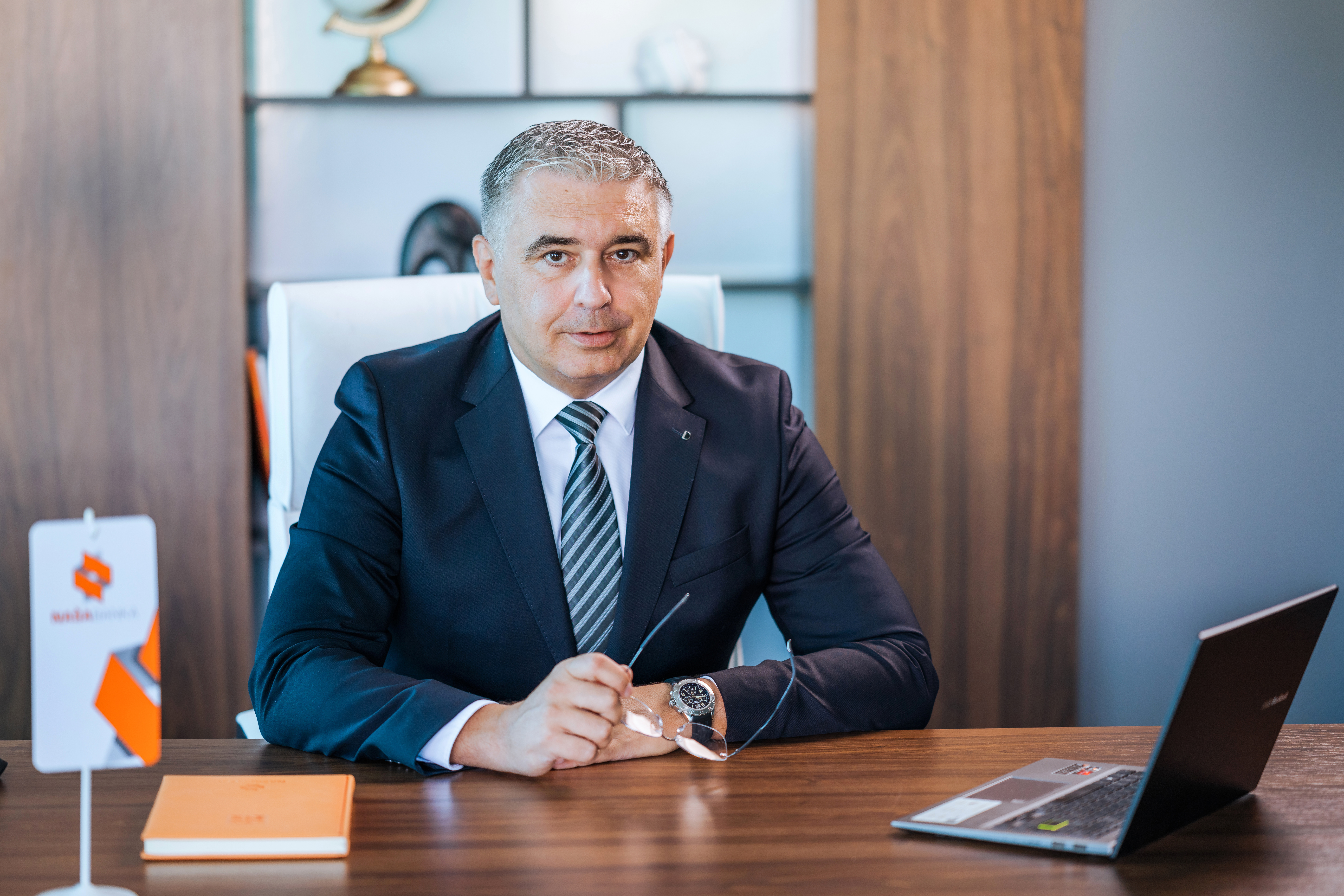
• The development of artificial intelligence and digitalization is definitely changing banking. What specific processes in your Bank are already being transformed and how will this affect the way employees work and the relationship with clients?
– We view the development of artificial intelligence and digitalization as one of the most important changes in modern banking, but we approach it responsibly and measuredly. In banking, it is very important to understand where new technologies really bring value, how they affect security, trust and quality of services, and how they can improve the work of employees and the customer experience before making any decisions. Our Bank is aware of the changes brought about by AI tools and the broader digital transformation, which is why we are open to proven forms of their application that are appropriate for our business. We have already started testing and using certain models of AI tools, although we have not yet definitively adopted any of them as a standardized solution at the level of the entire Bank. We consider it natural and responsible to first understand the possibilities, then assess the risks and benefits, and only then make decisions about wider application. For now, we use AI tools most in the human resources segment, especially in the procedures for hiring, selecting and monitoring employee development. The first experiences are very encouraging, I would even say impressive, because such tools can provide complex and in-depth insights that would have previously easily remained hidden or would have required much more time and human analysis. AI helps us to better understand candidate potential, employee development needs, patterns in team dynamics, opportunities for better career planning, etc. I must emphasize that we do not view AI as a replacement for humans, but as a support for people to work better and more efficiently. In banking, knowledge, responsibility, professional judgment and trust are still irreplaceable. AI can help us to arrive at better analyses faster, but final decisions must remain in the hands of professional and responsible people.
When we talk about digitalization, it is certainly one of our strategic goals. This is already evident through the development of mobile banking "Our mBank", which allows clients to perform a large part of their daily banking transactions simply, quickly and whenever it suits them. 24-hour payments, cardless withdrawals, limit changes, card management and other functionalities take over the burden of routine transactions that previously required going to a branch. In this way, the role of employees is also changing. The counter and branch will not disappear, but their role is becoming different. They should be less and less a place for performing simple, repetitive transactions, and more and more a place for advice, support, initial contact with the Bank and solving more complex client needs. This means that employees will develop advisory, communication and analytical skills even more in the future.
Our goal is to combine local accessibility with practical digital tools. The client needs a digital service when he wants speed and independence, but also a person in the branch when he wants a conversation, additional explanation, advice or assurance that he has made a good decision. We believe that this combination is the future of banking - technology that simplifies everyday life and people who build trust.
That is why we do not see AI and digitalization as a move away from the client, but as a way to be more accessible, efficient and useful to them. If technology frees up employees' time from routine tasks, they can devote more time to understanding the real needs of their clients. And this is especially important for a bank of our profile, because we see our opportunity precisely in closeness, accessibility, professionalism and the ability to adapt modern solutions to specific people and local communities in which we operate.
• How do you position yourself in relation to larger banks on the market? What do you see as a chance for Our Bank?
– Larger banks have obvious advantages – larger scale, larger budgets, a wider client base, stronger technological capabilities… We respect that and are aware of it. However, the banking market is not only made up of the largest systems. There is also a necessary space for a bank that is closer to the client, faster in understanding their needs and more willing to build a relationship that is not based solely on a standardized product. Our Bank's chance lies precisely in this combination of domestic capital, local understanding, banking tradition, flexibility and a clear ambition to grow responsibly. Our chance is to be a bank that is strong and stable enough to provide security to the client, and close and operational enough to truly understand them.
In the previous period, we have further strengthened our regulatory capital, which is of essential importance for the bank. Stronger capital means greater resilience to possible market and credit shocks, a stronger basis for loan growth, better risk management capabilities and greater scope for supporting the population and the economy. For clients, this means a more secure partner, and for the Bank, the ability to implement its development plans in a more stable and long-term manner. A particularly important step forward is the acquired international credit rating. In 2024, our Bank secured the international credit rating “B-/B with a stable outlook”, obtained from the renowned agency S&P Global Ratings. This rating is not just a formal assessment, but an expert confirmation of the Bank’s stability, responsible business operations and transparency in a challenging environment. This made our Bank the first, or rather the only, bank with domestic capital in Bosnia and Herzegovina to achieve this. It is particularly significant for us that this credit rating was confirmed last year. This shows that this is not a one-time recognition, but rather a continuity of operations that can withstand international scrutiny. In practical terms, the Bank today has virtually all the important prerequisites for entering the international market. It has a strengthened capital base, stable prospects, a clear ownership structure, improved risk management and an internationally recognizable credit profile.
This does not mean that we want to skip stages of development or present ourselves as bigger than we are. On the contrary, our approach is to grow from realistic foundations. But the international rating and strengthened regulatory capital give us additional reputation and business strength. They send a message to clients, partners and potential investors that a domestic bank, with responsible management and a high level of transparency, can reach standards that are recognizable even outside the domestic market.
Our goal is to build a bank that will be recognized for its stability, professionalism, responsible risk management, quality of customer relations and willingness to support the development of local communities. This is an area in which we see our long-term opportunity.
• You have recently been the President of the Board of Directors of the Association of Banks of Bosnia and Herzegovina. What key changes in the regulatory or market environment do you consider to be priorities for the sector?
– The banking sector is, in my opinion, the most regulated business sector in Bosnia and Herzegovina. This is not some banking mantra, but a concrete result of many years of regulatory development, constant supervision, and high requirements in risk management, capital, liquidity, information security and client protection. The banking market is probably the most regulated market in BiH, because banks operate in an environment where the rules are clear, controls are continuous, and responsibility is very high. That is why I believe that our priority now is smart alignment with European payment and digital standards, because the TIPS Clone and SEPA projects are extremely important for the banking sector, but also for citizens and the economy. TIPS Clone is a step that precedes fuller integration into the European payment area. It is about establishing a platform for instant payments, based on the European TIPS model, which enables the execution of payments in real time, 24 hours a day, seven days a week, throughout the year. In October 2025, the Central Bank of Bosnia and Herzegovina signed a Letter of Intent for this project, which should be operational by the summer, and the goal is for BiH to obtain a platform interoperable with the European TIPS system and thus pave the way for integration into the SEPA payment market. For citizens, this means faster, simpler and more accessible payments. For the economy, lower cash flow costs, faster fulfillment of obligations, more efficient operations and easier connection with partners in the country and abroad. For banks, this means modernizing the payment infrastructure and creating space for new digital services, mobile payments, more advanced applications and a better user experience.
After that comes SEPA as a broader and strategically important goal. SEPA, or the Single Euro Payments Area, enables payments to the countries of the European Union and other members of this area to be faster, more standardized and more favorable. Serbia formally became part of the SEPA area in May 2025, and banks in Serbia began to execute SEPA payments operationally as of May 5 this year. This shows how important this process is for the financial integration of the countries of the region into European flows. SEPA is a priority for BiH because we are not just talking about banking technology, but about the competitiveness of the entire economy. Every exporter, freelancer, small business, family business, student and citizen who receives money from abroad or a company that pays suppliers in Europe will feel the difference if payments are faster, cheaper and simpler. This is one of the reforms that will be very concretely noticed in everyday life.
Our bank has a network of 30 branches. With its operations, it covers almost the entire area of Republika Srpska, from Banja Luka to East Sarajevo. Our goal is the constant expansion of the business system, as a function of the best possible quality of our services and the greatest possible availability to clients.
Find the branch closest to you.